
Dec
11
2025
13:47
What Makes Volcanic Wine Special?
A Decade of Watching the Earth Shape Flavor
After ten years of working with volcanic terroir, I can say this with certainty: volcanic wine has a voice. It isn't loud, fruity, or showy. It is also elemental. It is a slow conversation between stone, vine, and time. When you taste it, you don't just taste fruit. You taste rock.
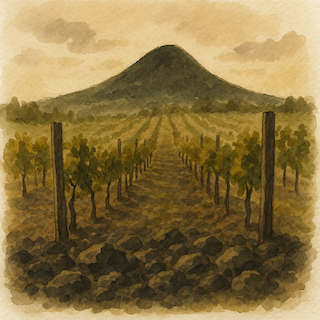
Volcanic vineyards are born from geological drama. Lava flows and ancient ash layers break down over millions of years into soils rich in basalt, tuff, and minerals. This terroir forces vines to struggle. Deep roots twist between stones to search for moisture, especially now, as climate change and lack of rain challenge winemakers more each year. That struggle concentrates something rare in the grapes: minerals, tension, and structure.
I've seen this most clearly in places where vineyards grow almost directly out of ancient lava. Somló's dark basalt soils and tuff produce wines with a striking mineral backbone, and Kőfejtő Cellar expresses this beautifully with crisp edges, saltiness, almost like stone dust after rain. On Szent György-hegy, Pap Wines captures another side of volcanic personality, where white and red grapes both absorb the volcanic imprint of tuff layers beneath them. Whether delicate or powerful, the wines feel shaped by geology.
Standing in a volcanic vineyard, you notice immediately that the basalt rocks are warm even after sunset. They hold heat and memory. You can imagine the land erupting, cooling, cracking, and slowly becoming fertile. That physical connection never leaves the wines. Every bottle is a geological story, quietly retold.
For anyone beginning to explore volcanic wine, here's a simple way to start: taste the same grape from a volcanic region and a non-volcanic one. Don't overthink it. Just pay attention to how the volcanic one seems leaner, fresher, saltier, more focused. Then take the next step: pair these wines with rustic food. The natural acidity cuts through heavy dishes like roasted meats, stews, smoked cheeses, traditional countryside meals beautifully. It's a surprising harmony: tough landscapes, traditional foods, softened by precise acidity.
Volcanic wines are not just special because of where they come from. They are special because the land demands patience from the vine, from the winemaker, and from the drinker. They reward curiosity. They invite you to listen, not just taste.
That is what keeps me fascinated after a decade. The earth speaks through these wines. All you need to do is take a sip and pay attention.